
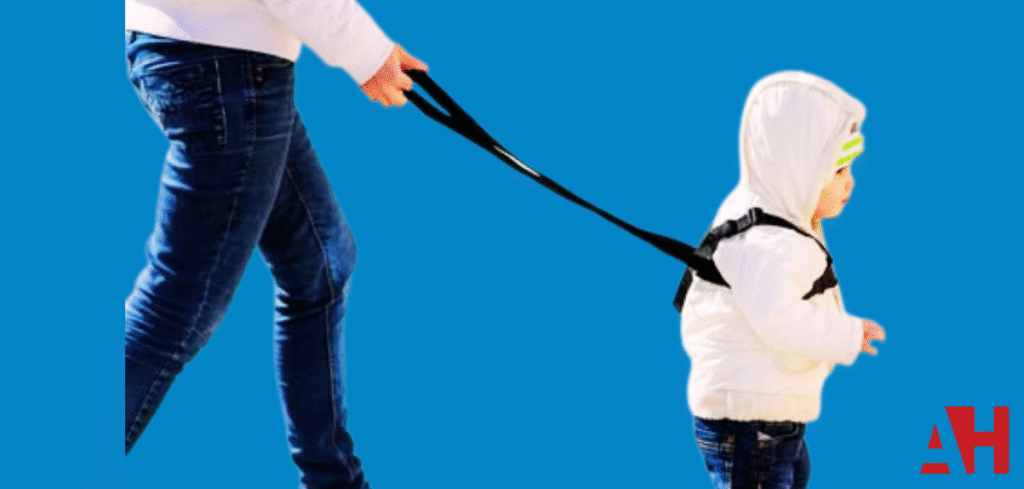
Parents are often looking for practical ways to let their child safely explore and move around. A harness is increasingly mentioned as a helpful tool. Its use can bring peace of mind in busy places such as shopping centers or stations. These are locations where a child may feel free and start wandering off on their own.
Many parents want to give their children the freedom to explore the world while also being sure they stay close. The harness provides a balance between freedom and protection. Conversations with child experts show that such tools are becoming more widely accepted. Families with energetic children especially value the sense of safety it brings.
It is also simple to use and can be quickly put on or removed. This makes it easy to adapt to different situations.
No Right or Wrong
There is no clear rule about whether to use a harness or not. Each family makes a choice that fits their own situation. Parents who use one often do so to guide their child more easily. Others feel more comfortable staying alert without a tool.
The most important principle is that children have the chance to learn about the world through play. Safety is always the main focus. The harness is not meant to limit a child but to make the surroundings more manageable. Many families say this reduces stress in crowded moments.
The discussion mainly shows that there should be space for different approaches. Each child and parent can find what works best for them.
Parents Who Rely on It
Some parents emphasize that a harness gives them peace of mind in daily life. It allows their children to move around while parents remain relaxed. For curious children who want to explore quickly, it offers extra support. It is especially useful during outings to theme parks or markets.
Parents say their children actually experience more freedom this way. At the same time, they know their child stays close. Using a harness prevents parents from feeling constant tension about keeping track of everything. This allows them to enjoy themselves more as well.
Many report that it is often only used for a certain period, until children learn to listen better and understand their environment.
How Bystanders React
Many parents notice that people sometimes look surprised when they see a child on a harness. It remains a subject that sparks many opinions. Some passersby find it unusual, while others consider it practical and clever. These varied reactions influence how parents use it.
Parents who choose not to be affected by others explain that they focus on their child’s safety. For them, that always outweighs outside opinions. Experts point out that parenting choices are often personal and influenced by culture. It is natural that people see this tool differently.
By keeping discussions open, more understanding grows between parents.
Experiences in Practice
Stories from practice show that a harness often gives parents extra confidence. This is especially true with children who tend to run far ahead. One mother explained that she felt much calmer in a large shopping center. Her child walked freely, yet remained close thanks to the harness.
Parents also say that the tool helps make outings more enjoyable. They feel less unsettled because they know their child stays within reach. It proves particularly useful during holidays or events where there are many distractions. These are settings where children naturally want to explore everything.
Such experiences often reassure other parents that the tool can be valuable.
Comparison With a Pet
A common argument is that a harness might look like something used for a pet. Yet parents say this comparison is not accurate. The purpose of a harness is protection, not control. It allows children to discover their surroundings safely.
Experts stress that it should be seen as a practical item rather than as a symbol. It is simply a tool that serves a clear function. Parents also usually choose to use it temporarily, depending on their child’s stage of development. It fits within broader parenting strategies.
This perspective helps to make the discussion more balanced.
A Safe Choice
Parents who opt for a harness say they do it out of care and love for their child. It gives them reassurance that outings can be more relaxed. They mention that it allows them to have a short conversation or look at something without worry. Meanwhile, the child enjoys safe freedom of movement.
The harness is often viewed as an addition, not a replacement for supervision. Parents remain actively involved in guiding their children. The combination of direct attention and the tool makes outings more pleasant. This benefits both child and parent.
Ultimately, its use is about enhancing safety and enjoyment.
Only for Special Situations
Some families choose to use a harness only in particular settings. For example, during a holiday in the mountains or on a ski slope. In these environments, there is often more activity and speed, which makes the tool practical. Children experience it as a natural way to move freely.
In daily life, these parents rely more on clear rules and direct guidance. The harness serves as a temporary support. This creates a balance between freedom and protection. Its use is tailored to the moment and the circumstances.
This shows the many ways the tool can be applied.
Learning Through Limits
Another benefit parents mention is that a harness helps children understand limits faster. They discover how far they can go and when they need to stop. This raises awareness of their surroundings. Many parents find that their children gain independence sooner this way.
The harness thus serves not only as a tool but also as a learning experience. It helps build understanding of what safety means. Parents notice their children begin to understand when they should wait or pay attention. This foundation stays with them even after the harness is no longer needed.
It can therefore be a temporary support with long-term benefits.
Safety Over Opinions
The topic often sparks discussions, but many parents explain they prefer to focus on safety. Their decision is made with care and responsibility. They see the harness not as a restriction but as support. It lets their child move freely within safe boundaries.
Child experts highlight that trust and security are key in such choices. Families decide based on what fits their child and lifestyle. It is important that each family has the freedom to follow its own path. Respect and understanding are crucial in this process.
This helps keep the debate positive and constructive for everyone involved.
Finding the Balance
The conversation about harnesses shows that there are multiple valid approaches. For some families, it is a regular tool; for others, a temporary option. The central theme is always ensuring safety and enjoyment. Parents want their children to explore without worry.
The discussion also shows that there are many ways to handle parenting situations. The harness is just one of these options. By being open to different choices, parents build mutual understanding. This contributes to a positive and supportive parenting environment.
In this way, families find their own balance in guiding their children.
Key-points
- A harness helps parents let children explore the world safely.
- There is no fixed rule: each family chooses what suits their needs.
- It can be used temporarily or more regularly.
- Parents feel calmer, and children enjoy freedom of movement.
- The discussion shows that parenting is diverse and personal.
Disclaimer
This publication does not contain financial advice and is intended for readers genuinely interested in our content.
References